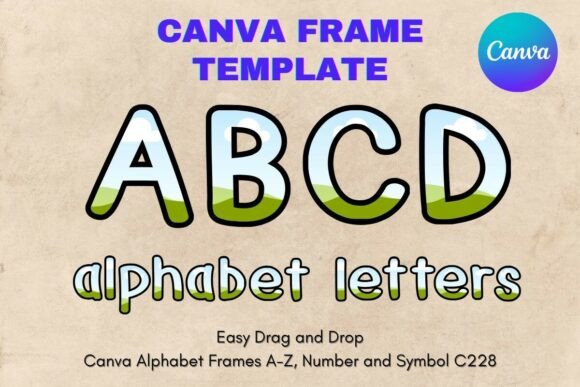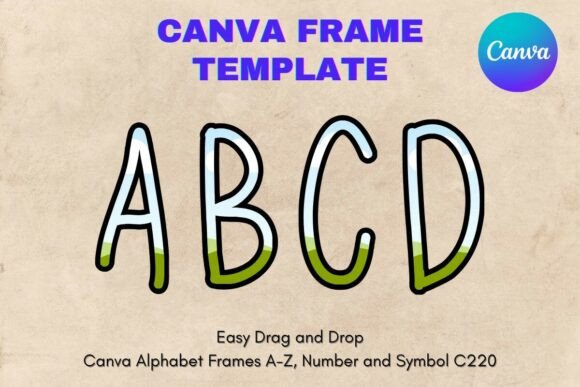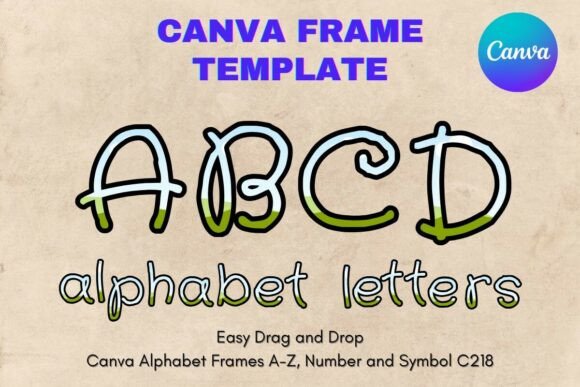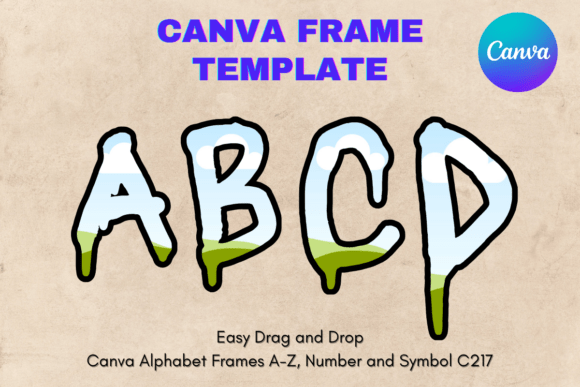
Canva Letters Frame Alphabet Template193
A Designer’s First Look: Clean, Friendly, and Ready for Stitching
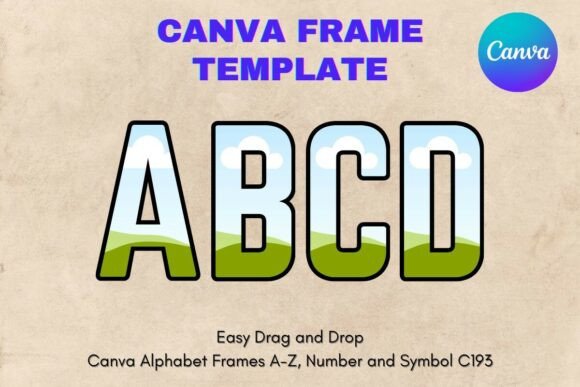
When I opened Canva Letters Frame Alphabet Template193, my first thought wasn’t “cute” or “trendy”—it was “this will hold up.” As someone who’s stitched hundreds of custom letters for baby onesies, boutique aprons, and Etsy tote bags, I know how quickly a charming digital frame can collapse under thread tension or vanish in the nap of a sweatshirt. This one lands softly but confidently: rounded corners, balanced negative space, and letters that breathe within their frames—not cramped, not sprawling. It feels like a quiet upgrade to classic monogramming: approachable enough for a handmade tea towel, polished enough for a wedding gift pillow cover.
How It Actually Works on Real Embroidery Projects
I tested Canva Letters Frame Alphabet Template193 across three real projects: a linen kitchen towel (for a local café’s holiday gift set), a cotton-blend baby bodysuit, and a heavyweight canvas tote bag. On the towel, the frame held crisp edges without over-stuffing the fabric—no puckering, even with light stabilizer. On the bodysuit, I resized it slightly smaller and used a tear-away + cut-away combo; the satin stitch outlines stayed smooth, and customers later told me the lettering looked “delicate but sturdy.” The tote bag was the true test: dense fill stitches in the frame corners didn’t overwhelm the canvas, and the clean lines translated well into a bold yet refined statement.
This isn’t a design built for maximalist texture or chaotic layering. It shines where clarity matters: personalized gifts, small shop merchandise, nursery decor, and boutique branding. Think embroidered patches for craft fair badges, sweatshirt embroidery for a school fundraiser, or holiday embroidery on velvet pillow covers—it doesn’t shout, but it earns attention through restraint and rhythm.
Where to Use It Thoughtfully (and Where to Pause)
Canva Letters Frame Alphabet Template193 performs best on stable, medium-weight fabrics: quilting cotton, twill, linen, and midweight knits. It’s less ideal for highly stretchy fabrics (like jersey) without careful hooping and stabilizer strategy—or for very thin fabrics (chiffon, voile) where dense fill areas might show through or distort. On dark fabric, the frame’s subtle inner line benefits from high-contrast thread; I recommend testing thread colors before committing to black-on-navy or charcoal-on-forest green.
Curved surfaces—like caps or curved brim hats—require extra attention. The frame’s symmetry works beautifully on flat or gently contoured items (pillow covers, aprons, tea towels), but tight curves may compress the bottom corners unless you adjust placement or reduce scale. Tiny hoop sizes (under 4 inches) also demand caution: the frame’s clean margins shrink gracefully, but letter spacing tightens, and fine interior details may blur at very small scales. If your product line includes mini patches or baby cap embroidery, always run a test stitch-out on scrap fabric first.
What It Adds to Your Handmade Product—and What It Doesn’t Promise
This template elevates perceived value without demanding technical gymnastics. Customers notice the balance—the way the frame wraps the letter like a gentle hug, not a rigid box. That visual harmony builds trust: it signals intention, care, and consistency. For Etsy sellers and small shop owners, that translates directly to better photo mockups, stronger brand cohesion across listings, and repeat buyers who recognize your signature style. It also supports commercial embroidery workflows—clean vector-based framing means fewer digitizing surprises when converting to machine embroidery design files.
That said, Canva Letters Frame Alphabet Template193 is not an all-in-one solution. It’s a graphics asset—not a pre-digitized embroidery file. You’ll still need to digitize it properly for your machine, choose appropriate stitch types (satin stitch for borders, fill stitch for solid areas, running stitch for light accents), and manage stitch density based on fabric weight. It won’t auto-adjust for thread tension or hoop slippage. Its strength is in its adaptability, not its plug-and-play readiness.
Practical Notes Every Embroidery Designer Should Keep Handy
- Always test on scrap fabric—especially if using textured, dark, or stretchy materials.
- Check contrast in both color and grayscale: what reads as elegant on screen may fade on navy denim or get lost on heather gray.
- Review stitch density before finalizing: too dense = stiff fabric and thread breakage; too sparse = weak definition.
- Confirm hoop size compatibility—the 8.5×11 inch paper size gives flexibility, but your actual embroidery area depends on your machine’s maximum hoop dimensions.
- Inspect small details at 200% zoom: corners, inner frame lines, and letter terminals should digitize cleanly—not merge or pixelate.
- Use proper stabilizer: lightweight cut-away for knits, tear-away for stable wovens, and fusible for delicate layers.
- Verify licensing terms: since this is a digital embroidery file distributed via Canva, confirm whether commercial use (e.g., selling finished embroidered products or reselling digitized versions) is permitted before launching on Etsy or at craft fairs.
Final Thought: A Quiet Workhorse for Thoughtful Makers
Canva Letters Frame Alphabet Template193 won’t dominate your Instagram feed with flash—but it will earn quiet respect from customers who appreciate craftsmanship over clutter. It fits naturally into the rhythm of real embroidery work: no over-engineered flourishes, no fragile details begging for special handling. Just clean, confident framing that lets the letter—and the story behind it—take center stage. Whether you’re stitching a single personalized gift or building a cohesive line of custom apparel, this template earns its place in your design assets folder. Not because it’s flashy, but because it’s reliable, adaptable, and quietly professional.