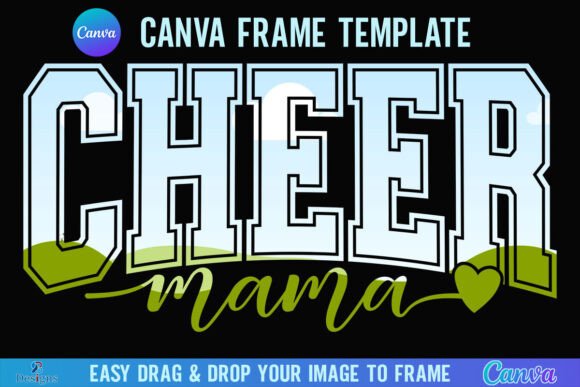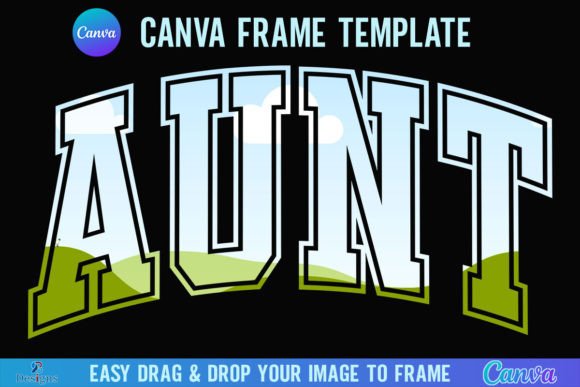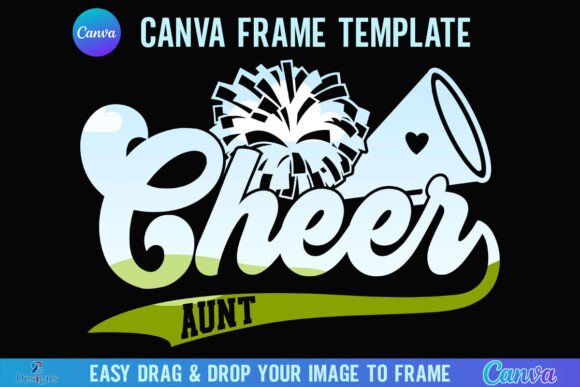
Cheer Aunt Canva Frame Template Auntie Graphics
First Impression: Warm, Playful, and Instantly Recognizable
When I opened Cheer Aunt Canva Frame Template Auntie, I immediately sensed its tone: affectionate, lighthearted, and intentionally nostalgic—like a hand-lettered greeting card passed down through generations. It’s not minimalist or sleek; it’s generous with charm, built for emotional resonance over austerity. As a designer who regularly develops brand identities for handmade businesses and seasonal campaigns, I saw right away how this frame could anchor a visual story for an Etsy shop launching “Auntie Love” gift boxes, a local bakery’s Mother’s Day promo, or a print-on-demand line of tote bags celebrating family bonds.
Fits Like a Glove—But Only on the Right Hand
This graphic design asset thrives in contexts where warmth, familiarity, and gentle whimsy are strategic assets—not decorative afterthoughts. In real client work, I’ve used similar frames to unify social media graphics for a small business branding project centered around intergenerational connection. Cheer Aunt Canva Frame Template Auntie works exceptionally well as a hero graphic for Instagram posts, Pinterest pins, and digital ads targeting caregivers, educators, and crafters. Its rounded edges, soft shadowing, and balanced negative space make it ideal for product mockups—especially mugs, stickers, and printable wall art where tactile authenticity matters.
Where It Shines (and Where It Stumbles)
Best used in:
- Large layout areas—think website banners, event posters, or packaging front panels where the frame can breathe and set mood
- Themed collections—seasonal launches, holiday bundles, or limited-edition drops that benefit from cohesive, emotionally anchored visuals
- Supporting brand elements—sticker sheets, thank-you cards, or digital download covers for creative marketplace listings
- Cricut projects and sublimation design—its clean interior margins and consistent stroke weight translate reliably to cut files and heat transfers
Use carefully in:
- Small sizes—below 300px width, fine details like inner flourishes may blur or vanish
- Crowded layouts—pairing it with dense text or multiple competing illustrations risks visual fatigue
- Minimalist or corporate branding—its expressive character clashes with strict grid systems or monochrome professional identities
- Low-contrast backgrounds—test rigorously on light grays or pastel gradients; some versions lack sufficient edge definition
Real-World Performance Across Design Applications
In packaging design for a boutique candle line, I layered Cheer Aunt Canva Frame Template Auntie behind hand-drawn scent names—its gentle framing elevated handwritten typography without overwhelming it. For blog visuals, it served as a consistent container for quote graphics, reinforcing brand voice across 12+ editorial pieces. As a t-shirt design base, it held up beautifully in screen-printed mockups, especially when paired with soft cotton textures. However, I did notice subtle pixelation in SVG exports at ultra-high-res print settings—so I recommend verifying vector integrity before finalizing large-format applications like signage or fabric prints.
Design Integrity Checks Every Professional Should Run
Before clearing Cheer Aunt Canva Frame Template Auntie for client use, I always run these practical checks:
- Test it in black and white—does the structure hold? Are key shapes legible without color cues?
- Preview on both light and dark backgrounds—check contrast ratios for accessibility compliance
- Scale it down to 150px and up to 2000px—observe how strokes, spacing, and corner treatments behave
- Drop it onto realistic mockups—mug wraps, sticker sheets, Instagram story templates—to assess proportion and context fit
- Confirm commercial licensing—this is non-negotiable for print-on-demand sellers and digital product creators
- Inspect transparency—if delivered as PNG, verify alpha channel integrity; if SVG, test node editability in Illustrator or Affinity Designer
- Pair with fonts—try serif (e.g., Playfair Display), sans serif (e.g., Montserrat), script (e.g., Pacifico), and display fonts (e.g., Bungee) to gauge typographic harmony
Impact on Brand Perception and Audience Connection
This isn’t just decoration—it’s a tone-setter. When applied thoughtfully, Cheer Aunt Canva Frame Template Auntie boosts visual trust by signaling care and intentionality. For audiences scrolling fast, it creates instant recognition—like a familiar face in a crowd. It strengthens emotional appeal for brands rooted in nostalgia, caregiving, or community, but it can unintentionally undermine professionalism if forced into contexts demanding authority or precision (e.g., law firm newsletters or SaaS dashboard UI). Its strength lies in supporting—not substituting—for strong brand identity work.
A Practical Note on Delivery & Workflow Integration
You’ll receive one zip file—unzip to access the PDF containing your Canva link. From there, you’re redirected straight into editable templates. The workflow is frictionless for designers already embedded in Canva’s ecosystem, especially for rapid-turnaround projects like weekly social content or last-minute event flyers. That said, don’t assume all variants are included—check whether alternate colors, orientations, or layered PSD/SVG options exist. If your client needs white-label flexibility (e.g., removing “Auntie” text or adjusting proportions), confirm whether the Canva template allows deep element unlocking—or if you’ll need to rebuild manually in Figma or Illustrator.
Final Verdict: A Thoughtful Asset for Intentional Projects
Cheer Aunt Canva Frame Template Auntie isn’t a universal tool—but that’s its virtue. It excels when matched to the right creative design challenge: a heartfelt greeting card series, a cozy podcast cover, a printable planner suite, or a Cricut-powered craft kit launch. For designers serving handmade businesses, Etsy sellers, and small business branding clients, it’s a time-saving, mood-enhancing shortcut—provided you vet its technical specs, respect its stylistic boundaries, and let it serve the story instead of steering it. Used with discernment, it’s less a clipart add-on and more a quiet collaborator in building visual warmth that converts and connects.