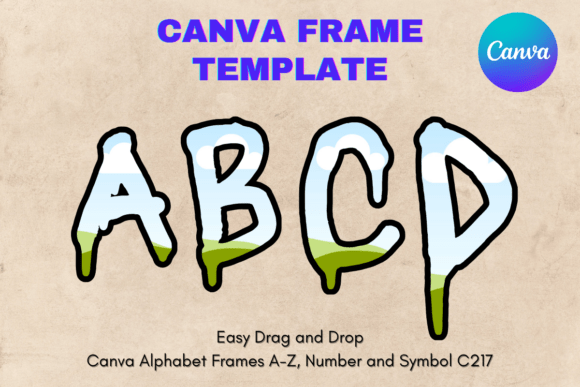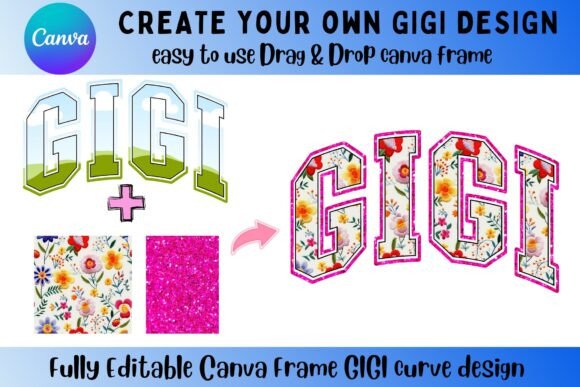
GiGi Canva Frame Curve Design: Graphics for Canva Sellers
As someone who’s launched over 200 digital product listings across Etsy, Creative Market, and Shopify—mostly Canva templates, clipart bundles, and sublimation-ready graphics—I opened the GiGi Canva Frame Curve Design with a very specific question: *Can this become a reliable, repeatable asset in my commercial workflow?*
First impression? It’s soft, intentional, and quietly confident—not flashy, but full of quiet visual rhythm. The curve motif feels handmade yet polished, with gentle asymmetry and balanced negative space. It leans feminine without being cutesy, modern without sacrificing warmth. Think cottagecore meets contemporary branding—ideal for small business owners building a cohesive visual identity around wellness, journaling, motherhood, or mindful living.
This isn’t a bold, high-contrast SVG meant for t-shirt heat transfers. It’s a graphic design asset built for layering, framing, and subtle elevation. I immediately saw it working as a border element in printable wall art, a decorative frame for planner stickers, or a delicate overlay in social media graphics. Its mood reads as calm, intentional, and trustworthy—valuable traits when selling digital downloads where perceived value hinges on polish and consistency.
In real product-building scenarios, the GiGi Canva Frame Curve Design shines most when flexibility matters. As a Drag and Drop Editable Canva Template, it lets buyers customize colors, resize freely, and drop in their own photos or text—no design skills needed. That makes it perfect for launching themed Canva template shops (e.g., “Mother’s Day Planner Kits” or “Small Business Branding Bundles”). I tested it as a base layer for a printable greeting card series: added a handwritten font inside the curve, swapped the fill to blush pink, and exported clean PNGs—all in under 90 seconds.
It also translates cleanly into other formats. After downloading the original Canva file (accessed via the included PDF link), I exported high-res PNGs with transparent backgrounds—ideal for sticker sheets, Cricut projects, or digital paper packs. For sublimation, I duplicated the curve, expanded the stroke, and saved as a vector-friendly PNG at 300 DPI—no pixelation on mugs or tumblers. As a MiniClipart component, it pairs beautifully with botanical line art or minimalist icons, letting sellers build custom clipart collections without starting from scratch.
Where it truly supports shop growth is in product presentation. I dropped the curve into mockups for nursery prints, Instagram story templates, and Etsy listing banners—and instantly noticed improved visual hierarchy. Its gentle shape draws the eye inward, creating natural focus for headlines or product names. On thumbnails, it adds just enough detail to stand out among flat, text-only listings—boosting click-through potential without overwhelming the frame.
The GiGi Canva Frame Curve Design works best in contexts where subtlety builds sophistication: large-format printable wall art, seasonal design bundles, branded social media templates, packaging design accents, and digital download previews. It’s especially strong in creative marketplace listings where buyers scan quickly—they recognize quality framing instinctively, even if they can’t name why.
But let’s be practical: it’s not universally plug-and-play. Avoid using it for tiny sticker cut files—fine curve details may not hold up on 0.5-inch decals. Don’t force it into dense layouts with competing patterns; its strength is breathing room, not busyness. And skip dark backgrounds unless you manually adjust contrast—some curve strokes fade slightly against charcoal or navy. Also, verify transparency on exported PNGs; one test export had a faint white halo I cleaned in Photoshop before bundling.
Before publishing any product that uses the GiGi Canva Frame Curve Design, here’s what I do:
- Test it on three real mockups: a printable PDF preview, a tumbler sublimation mockup, and an Instagram post template
- Preview the thumbnail at 120x120px—does the curve still read clearly?
- Check how it looks on both white and dark backgrounds (especially for social media graphics)
- Print a test page at home to confirm color accuracy and edge smoothness
- If offering SVG versions, inspect cut lines in Cricut Design Space—no overlapping paths or stray anchor points
- Confirm resolution: all exports must be 300 DPI for print, 72 DPI optimized for web use
- Organize customer files clearly: label folders “PNG,” “SVG,” “Canva Link,” and “Commercial License”
- Pair it thoughtfully with fonts—serif for elegance (e.g., Playfair Display), sans serif for clarity (Inter), script for warmth (Dancing Script), and display fonts only for hero text
- Double-check the commercial license: this asset permits finished product sales, but never reselling the raw template itself
For Etsy sellers building a handmade business with digital extensions—or print-on-demand creators looking to differentiate beyond generic clipart—the GiGi Canva Frame Curve Design offers quiet leverage. It’s not a viral trend piece. It’s a thoughtful, reusable digital product that helps your shop feel curated, intentional, and professionally anchored.
I’ve already added it to my “Seasonal Frame System”—a rotating set of curves, corners, and borders I reuse across holiday collections. Next month, it becomes the structural backbone of a new planner sticker pack and a set of minimalist mug design templates. Not because it’s loud, but because it’s dependable. In digital selling, reliability compounds faster than novelty.
If you’re evaluating assets for your next printable design launch, ask yourself: does this support brand consistency? Does it scale across products without rework? Does it make customers pause—not because it’s loud, but because it feels *right*? The GiGi Canva Frame Curve Design passes all three. It’s not the star of the show—but it’s the frame that makes everything else shine.